

How to Choose Brand Colors That Reflect Your Business Personality
A simple guide for non-designers to pick a cohesive palette
Choosing the right brand colors goes far beyond aesthetics. The palette you choose becomes part of your visual voice, expressing your values, attracting the right clients, and shaping how people feel when they interact with your business. And the best part? You don’t need to be a designer to make smart, confident color decisions.
Here is a simple, practical guide to help you choose a palette that genuinely reflects your business personality.
Start With Your Brand Personality
Before you even think about colors, think about mood. Ask yourself:
- What three words describe your brand?
- How do you want people to feel when they see your content or website?
- Are you more modern or classic? Minimalist or expressive? Playful or calm?
Once you have clarity, color decisions become easier.
Examples:
- Calm, trustworthy, grounded → blues, greens, sandy neutrals
- Bold, energetic, youthful → oranges, reds, bright yellows
- Elegant, refined, timeless → deep blues, blacks, gold accents
- Creative, warm, approachable → terracotta, warm neutrals, soft pastels
Understand the Emotional Meaning Behind Colors
Color psychology isn’t an exact science, but certain shades tend to evoke consistent feelings:
- Blue: trust, stability, professionalism
- Green: balance, nature, growth
- Yellow: optimism, friendliness, warmth
- Orange: creativity, enthusiasm, accessibility
- Red: passion, urgency, excitement
- Purple: luxury, creativity, depth
- Pink: softness, empathy, femininity
- Black: sophistication, strength
- Neutrals (beige, cream, gray): calm, grounding, simplicity
Use this as a starting point, not a rulebook. Meaning is always shaped by context, culture, and your unique audience.
Build a Balanced Palette (Without Overthinking It)
Even a simple brand palette usually includes 3–5 colors that work together. Here’s an easy structure for beginners:
✔ One Primary Color
The color that represents your brand the most. It appears on headers, buttons, key visuals, and social media templates.
✔ One or Two Secondary Colors
These support the primary color. They add interest without competing for attention. Choose shades that complement (not clash with) your main color.
✔ Neutral Background Colors
Think white, cream, gray, or charcoal. These keep your brand clean and allow the main colors to stand out.
✔ An Accent Color (Optional)
A bold shade used sparingly. Perfect for call-to-action buttons, highlights, or visual contrast.
Simple Color Theory for Non-Designers
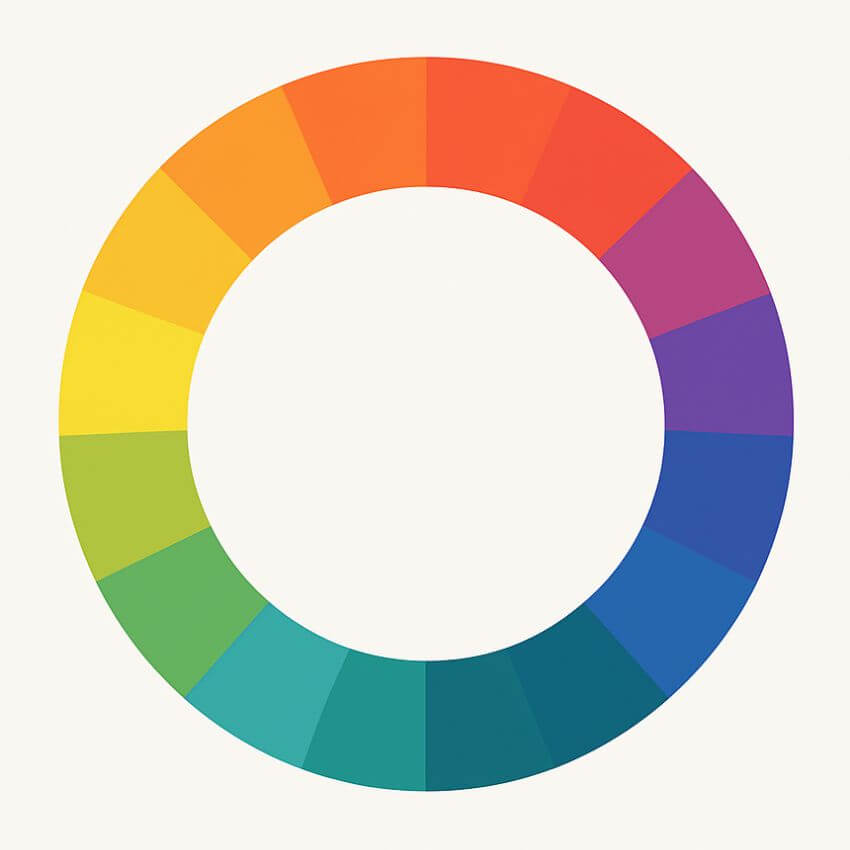
Color wheel
You don’t need to dive deep into art school concepts. Here are the basics that actually matter when building a brand palette:
Complementary Colors
Opposites on the color wheel (like blue + orange).
Why it works: high contrast and energy.
Good for: bold, dynamic brands.
Analogous Colors
Neighbors on the wheel (like teal + blue + navy).
Why it works: soothing and naturally cohesive.
Good for: calm, professional, harmonious brands.
Monochromatic Colors
Different shades of the same color (like pastel green + classic green + deep green).
Why it works: clean, minimal, elegant.
Good for: refined brands or those wanting a very consistent look.
Split Complementary
A primary color plus the two colors next to its opposite (like blue + yellow-orange + red-orange).
Why it works: balanced contrast without being too intense.
Good for: brands that want personality but not chaos.
If your palette feels “off,” the issue is usually contrast. You want enough difference between shades to create hierarchy, but not so much that the palette feels disconnected.
Make Sure Your Palette Works Everywhere
A great palette should feel consistent across:
- Your website
- Social media graphics
- Printed materials
- Photography styling
- Logos and icons
Tip: Test your colors on both light and dark backgrounds. A palette that looks gorgeous on Pinterest might not work for your website if the text becomes unreadable.
Seeing everything together helps you spot patterns (warm tones vs. cool tones, muted vs. vibrant, soft vs. bold) and makes your final choices much clearer.
Also check accessibility: make sure body text has enough contrast to be easy to read. (Tools like Contrast Checker make this simple.)
Collect Visual Inspiration
Before locking in your colors, create a simple mood board with:
- Photos that match your brand personality
- Textures and patterns
- Color swatches you’re drawn to
- Examples of brands you admire
Final Check: Does the Palette Feel Like You?
The right brand colors feel natural. They don’t fight for attention, and they don’t feel forced.
Ask yourself:
- Can I imagine using these colors for years?
- Do they feel aligned with my brand values?
- Would my ideal client feel comfortable and attracted to these tones?
If the answer is yes, you’ve found your palette.
Want a Done-For-You Brand Palette?
If choosing colors still feels overwhelming, or if you’d like a professional designer’s eye on your brand, I can help! At Sombras Blancas Art & Design, I create clean, cohesive brand identities and websites for small businesses, always thoughtful, accessible, and uniquely yours.
Just let me know if you’d like a customized palette, full branding kit, or website that reflects your brand personality perfectly.
No Comments